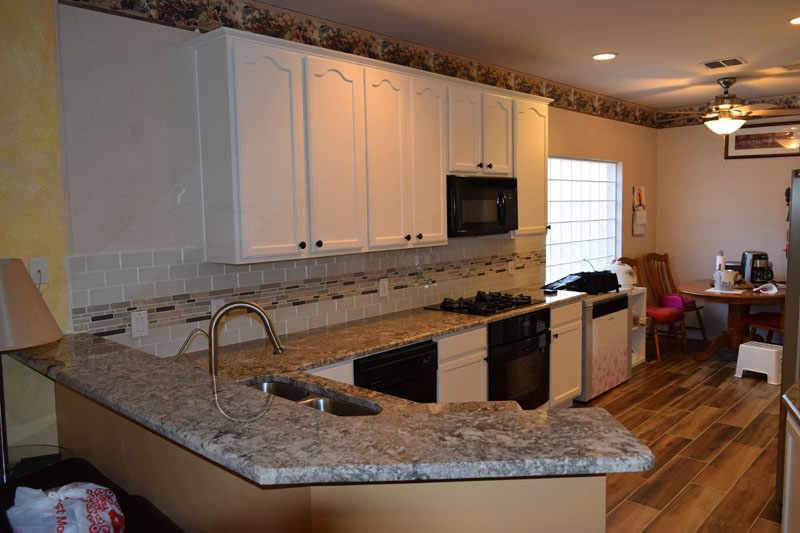
When you walk into a room and your eye is drawn to the cabinetry, you might not always realize how much those cabinets influence the feel, function, and value of your home. At Cabinet Transformer, we believe that cabinetry isn’t simply storage. It’s a foundational element of design, durability and daily usability. Investing in solid cabinetry now pays dividends for years—rather than treating cabinets as a temporary fix or “good enough for now.”
In many homes, cabinets are among the most heavily used and oldest furniture-like pieces in the house. Kitchen base cabinets support heavy pans, constant traffic, moisture, steam, and repeated opening and closing. Bathroom vanities face their own challenges with water, heat, cleaning chemicals, bright lighting and often small, tight spaces. Built-ins, laundry room cabinets, mudroom lockers—each of these sees wear and tear over time.
When cabinetry is neglected—when the finish is worn, the joints are loose, the materials are unsuitable for the environment—it doesn’t just look bad, it under-performs. Drawers become sticky; doors sag or misalign; finishes chip or peel; moisture creeps in; hardware fails. These issues may look like small annoyances at first, but left unaddressed they lead to frustrating dysfunction, increased maintenance, and eventually replacement. That replacement is costly, disruptive, and often feels like a budget compromise rather than a quality upgrade.
When we talk about longevity of cabinetry, we mean more than “will this last a few years.” We mean cabinets built and finished to remain structurally sound and visually pleasing for decades. Longevity means the materials, joinery, finish, hardware and installation are selected and executed with durability in mind. It means you’re not just getting a new color or fresh look; you’re getting a system that will endure daily use, resist environmental conditions, clean easily, stay aligned and function smoothly.
For homeowners in the Dallas–Fort Worth area, longevity takes on specific aspects: controlling for humidity swings, protecting from prolonged sunlight exposure, ensuring finishes resist scuffs and stains, making hardware designed for repeated motion. It's not just about color today—it’s about performance tomorrow.
When you choose to invest in high-quality cabinetry now, the benefits show up in routines, satisfaction and home value. Imagine opening a drawer and it glides silently, smoothly, with no wobble or catch. Imagine doors that close with soft-close hinges, aligned perfectly, no visible gaps. Imagine touching a painted surface that still feels smooth years later—not cracked, chipped or dull. That’s the result of investing in quality from the start.
Moreover, when the cabinetry fits your space precisely, rather than being forced into standard sizes, you gain efficient storage, better layout, less wasted space, and fewer filler pieces. That means less compromise and more satisfaction every day. You get cabinets that feel custom, because they are.
From a value standpoint, high-quality cabinetry adds to how a home performs in the market. Buyers (and homeowners) notice when finishes, alignments and function feel premium. A solid cabinetry system signals care, investment and durability—things that increase trust in a home’s overall condition.
There are key components that determine if your cabinetry will last or not. First, materials matter. Hardwood, well-bonded MDF, stable substrates, proper panel construction—they all contribute to stability. Second, joinery and construction quality matter: strong corners, well-installed drawers and doors, accurate alignment. Third, finish systems matter: deep cleaning, proper primer, high-performance coatings, correct curing—they determine how the surface wears. Fourth, hardware matters: soft-close mechanisms, full-extension glides, durable hinges and pulls—they affect usability. Finally, installation and environment matter: proper fit, protection during fabrication/installation, control of dust and moisture.
When you skip one of these, you increase risk. For instance, a beautiful finish may look amazing day one, but if the primer was weak or sanding skipped, peeling occurs in a year. A high-quality material may be undermined by poor hardware. That’s why at Cabinet Transformer we treat every component seriously.
Too often homeowners choose a quick paint job or standard cabinetry fix and then accept issues later. A common pitfall is going with the lowest cost, thinking cabinetry is easily replaced. But when replacements happen every few years, the cumulative cost—and disruption—adds up. Another pitfall is ignoring maintenance: allowing moisture to sit near cabinet edges or using harsh cleaners that degrade finishes. Over time these habits erode even good cabinetry.
You avoid these by choosing a reputable provider with a process that emphasizes prep, finishing, materials and care. By choosing finishes built for durability not simply aesthetics. By staying aligned with a system that plans for the long-run, not just today’s look.
If you’re considering cabinetry upgrades, start by assessing structure and finish—not just style. Are drawers smooth? Are joints tight? Is the current finish scratched, dull or faded? Does the hardware feel sturdy or wobbly? If the infrastructure is weak, even a beautiful finish won’t last.
Then ask about the process: How will the cabinetry be prepped? Will components be removed or refinished in place? What finish products are used? How long will the finish cure before use? What warranty or guarantee is in place? At Cabinet Transformer we walk you through this so you understand the investment and how it translates into lasting performance.
Also consider storage design and materials: Custom cabinetry may cost more up front, but when built to fit your space precisely and incorporate efficient storage features, the value in daily use is undeniable. Match the finish and materials to your lifestyle—if you cook frequently or have kids, choose durable finishes and hardware. If you’re in a humid environment, ensure the substrate and finish system account for that.
Finally, maintenance matters. Even high-quality cabinetry benefits from a little care. Use mild cleaners, avoid excess moisture, wipe spills promptly, and use hinge/drawer adjustments as needed. That keeps performance high and extends longevity.
In homes where cabinetry was replaced or refaced originally purely for style, we’ve watched regret follow when the urge to change surfaces again arose within a short time. But in homes where the investment was made—materials chosen, finishes executed, hardware upgraded—the cabinetry still looked and performed like new years later. That’s meaningful in a home you plan to stay in, or one you are preparing to sell.
Moreover, by investing in long-life cabinetry, you reduce downtime, cleanup, dust, mess and stress. Cabinets are central to rooms like kitchens and bathrooms. A replacement project often means days or weeks of disruption. A well-planned investment in durability means fewer disruptions over the years.
At Cabinet Transformer we’ve committed to our process because we’ve seen what happens when corners are cut. We’ve seen finishes peel, hardware fail, joints sag. We’ve also seen what happens when you respect cabinetry as both design and utility. That’s why our services don’t stop at “make it look pretty.” They begin with understanding the condition, choosing appropriate methods, using materials built for Texas conditions, and delivering finishes that last.
We believe your cabinets should look as good five or ten years from now as they do the day they’re finished—and we build our process around that promise.